
Every morning across India, shutters rise before the city fully wakes up. Over 12 million physical stores form the backbone of Indian commerce, yet most remain completely invisible to the digital-first customer. This is the story of their silent struggle, and the quiet shift that could change everything.
In a narrow lane in Mumbai, a kirana store owner arranges biscuit packets and refills jars before his first customer walks in. In Nagpur, a salon prepares for the day's appointments, most of which will come not from bookings, but from familiarity. In Coimbatore, a hardware shop owner unlocks his store knowing that much of his business depends on people who already know where to find him.
 India's retail backbone lives in small, trusted neighbourhood stores.
This is how India has always worked. Not through algorithms, but through memory. Not through ads, but through proximity. Not through scale, but through trust.
But something has changed, quietly, and faster than most expected.
Discovery Has Moved. Businesses Haven't.
Today, discovery no longer begins on the street. It begins on a screen.
A nearby salon. A trusted electrician. A shop that has exactly what a customer needs. The first interaction today often happens on a phone, not at the shop counter.
 The first interaction today often happens on a screen, not on the street.
India did not just go digital. Customer behaviour did. The way people find, evaluate, and choose local businesses has fundamentally shifted, even if the businesses themselves haven't.
The Invisible Majority of Indian Commerce
India's economy still runs on local retailers, service providers, and family-run outlets. These are not exceptions, they are the system itself.
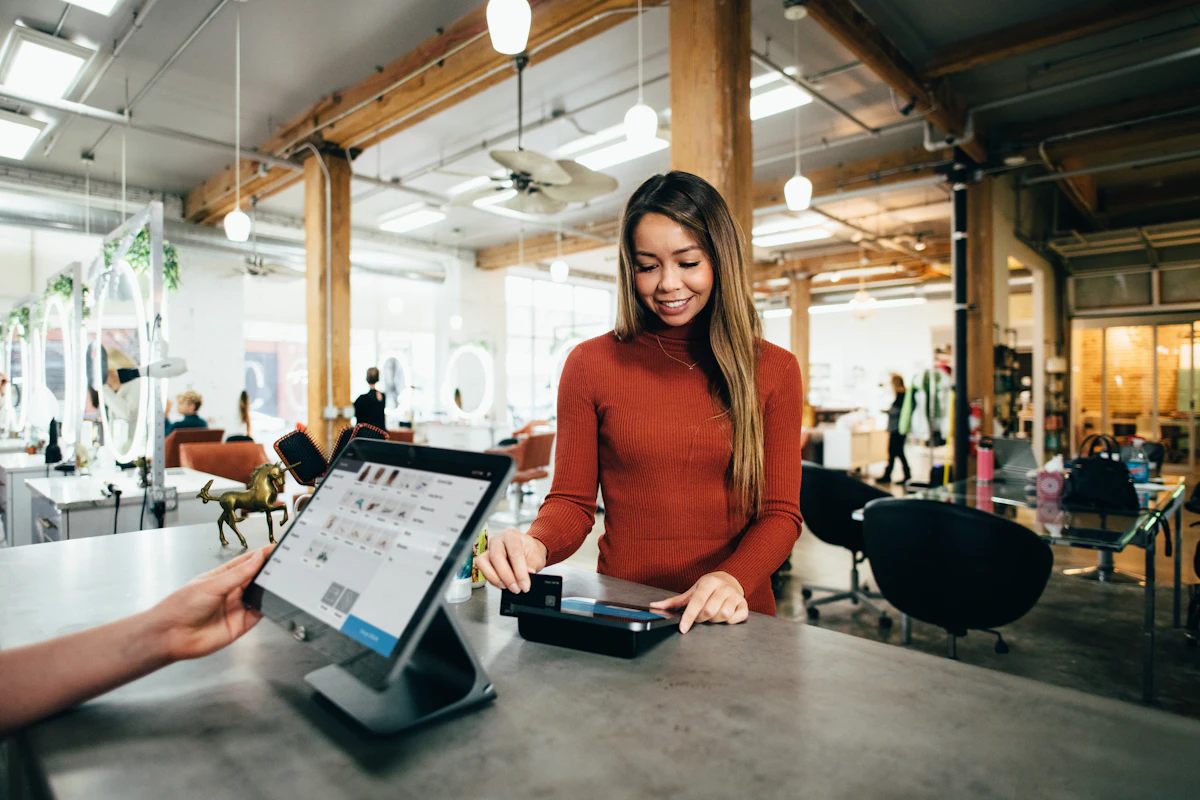 Millions of businesses operate offline, yet remain invisible online.
Consider the numbers:
- 12+ million physical retail stores across India
- Less than 5% have any form of digital presence
- Over 80% rely entirely on foot traffic and word-of-mouth
- Zero digital identity, no website, no storefront, no discoverable listing
The businesses that India depends on the most are the ones least equipped for how India now discovers.
The Real Problem Is Not "Going Digital"
For most small business owners, the challenge is not willingness, it is complexity.
They don't need a full e-commerce stack. They don't need to learn SEO. They don't need to manage inventory software with 47 settings. They need something fundamentally simpler:
- A way to be found, when someone nearby searches for what they sell
- A way to show their products, not stock photos, but their actual inventory
- A way to connect, with customers who are ready to buy or visit
Too many tools. Too much confusion. Too little time. That has been the story so far.
This Is Where the Shift Begins
The next phase of Indian retail will be defined by one simple outcome:
Making local businesses visible again, not by turning shopkeepers into tech experts, but by giving them tools so simple that going digital takes minutes, not months.
 Visibility is the new growth engine for local businesses.
Not marketplace listings that bury your shop among thousands. Not social media pages that depend on algorithms. A real, branded digital presence that belongs to the store owner, where customers can browse products, watch videos, and take action.
A Quiet Emergence
Among the early efforts in this space is a platform called VDOlocal, focused not on transforming businesses, but on making them discoverable in a digital-first world.
The approach is deliberately simple:
- Sign up in 60 seconds, no technical knowledge required
- Add products with real videos, not stock photos, your actual inventory
- Share your unique store link, on WhatsApp, Instagram, or anywhere
- Customers browse and take action, 24/7, from anywhere
No commission. No marketplace dependency. No middlemen. Just a store owner and their customers, connected through a simple digital storefront.
The Next Retail Revolution
The next great shift in Indian commerce will not come from building bigger marketplaces or more complex technology. It will come from a much quieter place:
It will not replace local businesses. It will reveal them.
The future will belong to those who are discoverable. Not the loudest, not the most funded, not the most technologically advanced, but those who simply show up when a customer is looking.
And for India's 12 million shopkeepers, that future starts with a single step: becoming visible.
Why "Simple" Is the Hardest Problem in Retail Tech
When technology people look at small Indian retail, the instinct is almost always to build more. More dashboards. More integrations. More settings. More training. The assumption is that a store owner who has successfully run a neighbourhood business for fifteen years simply hasn't been given enough features yet.
That assumption is wrong, and it is why most retail software aimed at Indian kirana shops, saree stores, jewellery shops, and neighbourhood salons has quietly failed for a decade. A shop owner who spends six days a week on the shop floor, who manages stock in a notebook, and who talks to every customer personally does not need forty-seven settings. They need five minutes, a phone they already own, and a tool that respects their time.
This is the hardest problem in retail technology: building something powerful enough to matter, and simple enough to actually use during a ten-minute lull between customers. Most products get one or the other. The ones that get both are the ones that last.
The WhatsApp Baseline
There is one technology that has already won among India's shopkeepers: WhatsApp. Virtually every store owner, from a Chandni Chowk textile trader to a Kothrud bakery to a Coimbatore hardware shop, already sends product photos, price lists, and order confirmations over WhatsApp every single day. It is the closest thing India has to a universal business interface.
Any tool that wants to succeed with this audience has to clear what might be called the WhatsApp baseline: it must be at least as easy to use as sending a WhatsApp message. If opening the app, uploading a product, and sharing a link takes longer or feels harder than a WhatsApp broadcast, store owners will, rationally, stick with WhatsApp and ignore the tool.
This is why VDOlocal is built around short phone-recorded videos, single-tap product uploads, and a shareable link that drops cleanly into any WhatsApp chat. The entire onboarding flow is designed to feel no more intimidating than setting up a WhatsApp group. If a shopkeeper can share a status update, they can run a VDOlocal storefront.
Beyond Visibility: Owning the Customer Relationship
Visibility alone is not enough. Marketplaces like Amazon, Flipkart, and Meesho have proven that being discoverable on someone else's platform comes with a permanent tax, a 15 to 30 percent commission on every sale, an algorithm that decides whether customers see you or a competing seller, and a customer relationship that ultimately belongs to the platform, not the store.
The real prize for a physical store owner is not just being found. It is being found and keeping full ownership of the customer once they arrive. That means the phone number, the shortlist history, the WhatsApp conversation, and the margin on every sale all stay with the shop, not with an intermediary that can raise fees, change rankings, or launch a private label competing with the store's best-selling product.
A branded digital storefront, with its own link, its own identity, and its own analytics, makes that ownership possible for the first time at this scale. It gives a neighbourhood store the reach of an online business without the extractive economics of a marketplace.
What Changes When a Shop Becomes Discoverable
The behavioural changes inside a store that becomes genuinely discoverable online are usually immediate and concrete. Customers walk in already knowing what they want. Price objections drop because the price was visible before the visit. Returns fall because customers saw the actual product on video before committing. The shop owner spends less time describing inventory and more time closing sales.
And over a few months, a second change appears: the store owner starts making stocking decisions based on what customers are watching, not just what is selling. A video of a product that gets two hundred views but no walk-ins is data. A product that sells through every week but gets almost no online interest is also data. Neither of those insights was available to the shop a year ago.
This is the quiet revolution the title of this piece refers to. It is not about replacing the shopkeeper with an algorithm. It is about giving the shopkeeper, for the first time in the history of Indian retail, the same visibility, the same data, and the same customer reach that large e-commerce brands have enjoyed for fifteen years. And doing it in a tool simple enough to use between customers on an ordinary weekday afternoon.
Get in touch with us to create your free video-first digital storefront, live in under 5 minutes.